
 Detroit Free Press Letter to Editor
As one of the last survivors of the Detroit polio epidemic of 1946 before the vaccine, my message to all parents of young children and all people anywhere who have not received the vaccine (unless medically advised):Get it now, before it's too late! Prevent unnecessary deaths, pain, suffering, life-long paralysis and disability.
Currently, in 2025, no proven medicine or treatment can stop poliovirus from causing devastation. Don’t believe the lies and misinformation you’ve heard from medically and scientifically unqualified individuals. The vaccine has been clinically proven safe and effective. This terrible plague has been eliminated.
Polio must not return!
Marsha A. Lynn
The Consequences of Polio
I contracted Polio in August 1945 when I was 11 months old. It paralyzed my left leg at that time. I had three corrective surgeries before I was 11 years old. I attended a school for disabled children through the 6th grade. I graduated from Nursing School in 1965, and worked as an RN for 20 years.
The onset of post-polio syndrome began in 1979. I suffered from increased weakness, fatigue, and intractable pain. Due to these problems, I was forced to stop working and apply for disability. At 40 years old this was life changing. I was walking with a cane when I left work, and since that time, I have regressed to a walker and now a wheelchair.
I am 81 years old now, and my entire life has been compromised by dealing with polio and its debilitating effects—not only the physical manifestations of this disease but the emotional and mental effects, as well. It has affected not only me, but also my loved ones who have supported me throughout the years. I mourn to think that this terrible disease may again have the power to savage another generation of those who choose not to receive the vaccine. I will do everything in my power to not let polio rear its ugly head again.
I am telling the story of polio and its consequences that invaded my life as an infant and have adversely affected my life for over 80 years so that we do not let another polio epidemic happen in this country.
Cheryl (Jensen) Tebo
Germantown, Wisconsin
Polio Survivors: We’re Still Here
We are still here. The world may have moved on, but those of us who lived through the polio epidemics remain as living reminders of one of history’s fiercest medical battles—and of the human spirit’s remarkable endurance. We were the children who lay in hospital wards surrounded by the sounds of iron lungs, the ones whose parents stood helplessly by, praying for movement to return to a limp arm or leg. We were told we might never walk again, and yet, somehow, we did.
Polio tested us in ways few can imagine. Some of us learned to walk with braces, some used crutches, and some rolled through life in wheelchairs. But we all learned to adapt—to climb stairs in our own way, to carry heavy books to class, to navigate playgrounds that weren’t built for us. We learned early that pity was useless and determination was essential. The virus might have touched our bodies, but it never defeated our will.
As the years passed, we built lives. We married, worked, raised families, and became teachers, engineers, nurses, artists, and community leaders. We contributed to society in every imaginable way, proving that disability does not define a person’s potential. Many of us lived long enough to see the disease that changed our lives nearly eradicated, thanks to the very vaccines developed in response to our suffering. In that sense, we became part of the reason no child today in much of the world knows what polio is. That’s something to be proud of.
Yet the journey didn’t end when the acute illness passed. Decades later, many of us faced a new challenge—post-polio syndrome, a slow return of weakness and fatigue that reminded us of our earliest struggles. It was as if the body that had fought so hard to recover was asking us to find strength all over again. And we did. We adjusted our pace, leaned on our friends, our families, and our memories of past courage.
We outlived expectations. We outlived predictions. Some of us outlived the doctors who treated us. We lived through wars, social upheavals, and pandemics. And through it all, we carried the lessons of polio: patience, perseverance, and perspective. We know what it means to lose something and to rebuild from almost nothing. We know the value of every step, every breath, every ordinary day.
So yes, we are still here. We may move a little slower, but we move with purpose. We may be tired more easily, but we rise with gratitude. We are reminders of resilience; proof that a body can be scarred and still be strong, that a life can be altered and still be full.
The world should remember us, not as victims, but as survivors and warriors who showed what courage looks like in motion. Polio changed our lives, but it also revealed our strength. And as long as one of us is here to tell the story, the spirit of survival lives on.
We’re still here—and we always will be.
Michael Kosove
Living with the Effects of Polio
 I have survived over 106 surgeries in the past 77 years, mostly to correct my polio deformities. Since having had polio at age two in Indonesia, where I was born of Dutch parents, my life has been full of adventure and challenges. At age nine my family and I fled Indonesia to the Netherlands due to a revolution. Two years later we immigrated to California, where better medical care was available for me and my polio problems. The first thing that happened was that the school nurse in my seventh-grade class called me into her office one morning. She had watched me in the hallways struggling with my walking and asked if I had contracted polio. I said yes. She then asked if the family and I had been vaccinated for the virus. This was in 1961. Since I was the only one who had gotten polio and no other family member did, my mother told me that everyone else was immune to it. The nurse then told me the shocking news that there are three strains of polio and we all, including me, needed to be vaccinated for all of them. As soon as we learned this, my parents took us all to get vaccinated for all three strains of polio. That made a huge impression on me, and I've never forgotten it.
At age twenty I married my best friend, Stan. We now have three wonderful children, four grandchildren, and one great granddaughter. Our life as a USAF family was a great experience for me because we ended up traveling all over the United States and Europe. I have been permanently in a wheelchair since 1986 when I was 38 years old, but it never stopped me from traveling even as recently as this month. I love learning about different cultures and meeting interesting people. But it has not been easy for me. I ended up having to buy a van with a lift or ramp and insurance does not cover that at all. My body has been through the mill for 75 years since I contracted polio. For years I walked with crutches and a long leg brace but my legs got weaker and weaker, finally landing in a wheelchair. Walking on crutches for years and then pushing a wheelchair has created serious problems in my arms. My left elbow has no more cartilage and is excruciatingly painful and getting very weak. I had my back and neck fused in 2010 from C2-S1 due to severe scoliosis from the polio. My neck hurts all the time, whether I am up or down, to the point of having to take strong pain medications.
Polio has truly been a struggle of pain, weakness and great difficulty. Always having to learn to adapt to every situation, from walking, or actually limping, to watching my body decline year after year and grieving through the whole process, has been difficult and challenging. Now at age 77 I am unable to dress myself, bathe myself, cook, or clean house. Even going to the bathroom is something I require assistance with. I am not happy about it, but life goes on. So, I have a cleaning lady for our house, a caregiver to personally help me, and even several friends who cook for us. God has blessed us tremendously.
My parents were wonderful, always being positive and supportive. Stan has faithfully stood by my side for 57 wonderful years, as have my children. My parents instilled a great positive attitude in me allowing me to be a survivor and overcomer. For that I am extremely grateful. I would not wish this disease of polio on anyone, and I wish the vaccine had been available when I was a child. It is a horrible disease to have to struggle with. So, from personal experience, I am all for vaccinations.
Corina Zalace
My Polio Experience
In September 1952 I contracted polio at age 11 months. I was hospitalized for two weeks with what doctors diagnosed as pneumonia. Large doses of penicillin were given with no improvement. I no longer could stand or walk. I tested positive for polio. My first birthday was spent in the hospital with polio. One of the lucky ones I survived polio under a year of age.
Over two years later, I was walking again with a brace and an elevated heel on my left shoe. But by age seven, I was struggling to walk and had to have surgery to lengthen my left leg. The summer of 1958 I spent four months in a wheelchair with a long leg cast. After cast removal that September, I returned to school in a wheelchair. My grade school was only one level, so it was easy to navigate. Unfortunately, the junior high/senior high school was three levels. Stairs were a challenge. The ADA was nonexistent.
At age seven, I decided to be a nurse. Several obstacles had to be overcome to accomplish this. Advisors said I would not last ten years as a nurse. However, my nursing career lasted over 30 years. While in nursing school I took care of a 10-year-old girl who had recently contracted polio. She was not vaccinated. My nurse’s training also took me to the Chicago Communicable Disease hospital. It was used to treat diphtheria, pertussis, typhoid, measles, etc. My assignment was in the pertussis ward. Infants and toddlers were suffering from a preventable illness. Vaccines were required for a nursing career. Vaccines are needed to protect children and adults. These diseases will come back with a vengeance without them.
Symptoms of post-polio appeared at age 25 along with arthritis in my spine. MS, ALS, and other neuro-muscular diseases were ruled out. Ten years later I was diagnosed with post-polio syndrome. I walk short distances with a cane but use a wheelchair or scooter for long distance walking. Rising from a sitting position is difficult with weakness progressing in my legs and arms. Even though I have enjoyed a good life, I would not wish my struggles and multiple challenges on any child. Currently it would be difficult to accept a life of disability from polio because it is a preventable disease with vaccines available.
Diana Sprague
Keep America Healthy
Well-meaning parents question the need to vaccinate their children and even to receive Covid vaccinations. Public health experts are concerned low vaccination rates may lead to paralytic polio reoccurring, which has no cure.
Reoccurring polio is incomprehensible. I am a scientist and use scientific understanding to improve and invent new products. I hope we can all agree: vaccinations save lives. Only vaccination levels over 95% cause polio extinction.
The return of polio horrifies me. I live with the paralytic effects of polio every day.
One support group member noted: “1952 was the height of the polio epidemic in the US. Of the nearly 58,000 cases reported that year, over 3,000 died and over 21,000 were left with mild to disabling paralysis. To many people in the ‘50’s, there was only one thing worse than dying of paralytic poliomyelitis—one could get the disease and live.” The iron lung allowed those with paralyzed diaphragms to be kept alive. (Compare with Covid in 2020.) Cute poster children showing their braces and crutches were used to raise funds for the March of Dimes to finance treatment and research.
After the acute phase of polio, people recovered to some extent. One member “had a brace. Dad said I didn’t need it and threw it out. I was doing very well. Polio was gone.”
Then in 1955, the largest mass experiment in history, using American children, showed the vaccine to be safe and effective. Within a few years, polio was eliminated from the developed world. Globally, a five-case low in 2021 is up to 99 in 2024 because of vaccine fear and misinformation.
After 10 to 40 years with no new effects of paralytic polio, 30 to 40% begin to experience the late effects of polio (post-polio syndrome or PPS)—increasing weakness, pain, fatigue and sensitivity to cold. It’s a double whammy.
A good news-bad news joke described it: “Good news—PPS is not fatal; Bad news—PPS is not fatal.” Current joke: “Doctor to patient, ‘The polio vaccine is not available. But you do have iron lung insurance.’”
When my children were small, I wondered how to answer, “Why do you walk differently using braces and crutches?” I would tell them about polio and assure them, “They were safe. They were vaccinated.”
Don’t make me a liar! Get vaccinated against polio and other diseases.
Warren Peascoe
Vienna, West Virginia
Vaccines Are Immune System Antiviral Software
I was diagnosed with paralytic spinal polio on August 9, 1955, at 15 months old. My mother had been trying valiantly to get me vaccinated all summer, but my pediatrician’s office wasn’t administering the Salk vaccine to their patients following the Cutter incident in spring of that year. Vaccinations resumed in June 1955 following confirmation that vaccine stocks from the three other manufacturers followed proper manufacturing processes and their vaccine contained only killed poliovirus. Because of the withholding of the Salk vaccine following the post-Cutter incident resolution by my pediatrician’s office, I missed a window of opportunity to be vaccinated.
I have dealt with the aftermath for the past 70 years. Immunization preventable diseases are just that–they equip the body to prevent or significantly reduce the likelihood of preventable morbidity and mortality. No one knows what the course of these infections will take in any one individual until it occurs–if it goes badly, they’ll have a lifetime to deal with the residuals–whatever form they take. Vaccinations play a huge role in protecting ourselves and everyone else. Individuals may have asymptomatic infections where they feel fine but are still shedding the virus to everyone around them who, if they become infected, may develop a severe infection. Individuals may also shed the virus before symptoms appear or for extended periods of time following infection which may then infect others.
Some folks want iron-clad guarantees of safety before getting immunized–not realizing that vaccines are one of the most successful disease prevention measures available. They are one of the most vetted medical and public health interventions in existence. They are ineffective once an infection by a pathogen has hi-jacked the body’s defense mechanisms and disease occurs–vaccines provide our bodies with an additional tool in its infection defense toolbox. It also defends us against infection from those around us–and you won’t necessarily know who those people are.
I remain vigilant keeping ALL my vaccinations current. I promote this message to those around me, who sometimes are surprised to learn I’m living history as a polio survivor, especially when they see me using assistive devices that they haven’t seen me use before. Remember, the pathogens don’t vanish just because no one seems to be ill.
Steven Ahrenholz
Union Township, Ohio
Reflecting on a Life with Polio
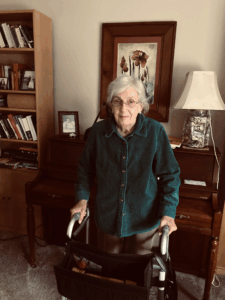 In August 1940, at age three, I came down with polio. In those days, with no vaccine, it was a parent's worst nightmare. Our family doctor told my parents the only available treatment was to put my legs in steel braces. My mother refused (reasoning that a limb put in a brace would never get stronger), so the doctor told her she might as well take me to Elizabeth Kenny, the Australian nurse famous for her unconventional treatment for polio. Kenny endorsed and demonstrated muscle “re-education”—hot packs followed by exercise.
Fortuitously, that year, Sister Kenny was in Minneapolis, my hometown, working at the Curative Workshop. She was tall and rather gruff, and I remember how frightened I was to be up on a high examination table. That is one of my earliest memories; others are also about polio. For the next six months, my mother applied hot packs to my legs and manipulated them every six hours, night and day. She held firmly to the belief that, thanks to Sister Kenny, her little girl could walk. I was left with paralysis in my right leg only. My parents encouraged me by pointing to then-President Franklin Delano Roosevelt, a fellow polio victim. "You can be anything you want," they promised.
Now I am 88, a retiree. After starting out as a Peace Corps volunteer and staff member in the late-1960s, I went on to have a satisfying career as writer-editor for organizations dedicated to bettering the lives of the poor in developing countries. Most people view me as a strong person who led a successful life despite polio. What they don't realize is the heartache, obstacles, and humiliation polio has brought me for 85 years. It has been the most defining factor in my personality and temperament.
The day in 1955 when the polio vaccine was announced, my mother was filled with gladness. Never again would a mother have to worry about polio, or watch her child grow more and more crippled, as she had. She would be incredulous to find out that today some people aren't interested in getting their kids vaccinated. No one should have to live with this terrible disease. Do your kids a favor, get them vaccinated the first chance you get. If all kids were vaccinated, polio would die out.
Diane Bouchard Bendahmane
Lebanon, New Jersey