
Frances Henke, Victoria, Australia
After being told by my General Practitioner that post-polio was "all in my head", insulted, I decided to find out everything I could, changing GPs immediately. At that stage I hadn’t rejoined the polio community, wanting to avoid wheelchairs, braces, physios and chaps in white coats. But, as a journalist I realised it was my mission to research and share information on late effects of polio available then as far as I knew, only from the United States.
So, I wrote an article for a national weekly newspaper, headlined ‘Veteran of the Paralysis.’ The subtitle was "Frances Kelly [maiden name] recalls the torture of treatment for childhood polio and the struggle to keep her individuality.” This was before being diagnosed with childhood amnesia trauma. Without realizing I remembered nothing of those years, I wrote the article by interviewing my mother and a couple of surviving medics of the day. The story was picked up by national radio. After one broadcast, a farmer on his tractor in remote Western Australia telephoned in tears of gratitude saying he now knew what was wrong with him. The article, I am proud to say, was republished in “a selection of Australia’s finest contemporary journalism.”
Polio Network Victoria, founded in 1987 – news to me – invited me to a meeting as a result. I attended but cried all the way home in the car over being among those very disabled people I wanted to avoid becoming. I got over that, finding those people were some of the few in the world who knew what not having a childhood was like. They were to become my most understanding friends.
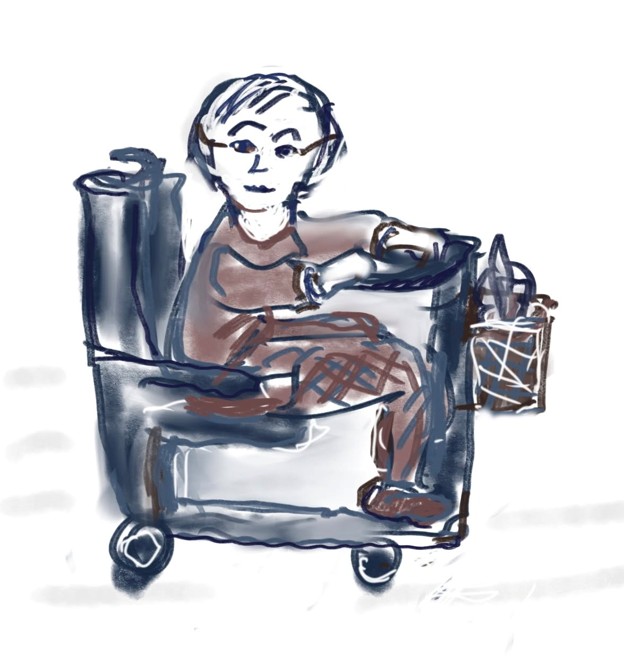
It took a while to seek proper medical help, but I attended a meeting in Sydney to form Polio Australia in 2007. The guest speaker was Dr. Stephen de Graaff, Director of Pain Services and Senior Rehabilitation Physician at Epworth Healthcare, who on a black board made a terrifying list of all the services we would need. I walked out sniveling, then realised I was going to need him – the only real polio specialist in Australia. Twenty years later, Dr. de Graaff has toured the world speaking about late effects of polio and is due to retire next year. We will miss him, of course.
Now at 83, I am finding old age is more a challenge than polio’s legacy, but as Michael Kossove wrote in the Spring edition of Post-Polio Health, we were enrolled in the world’s toughest life-training program. Polio taught us how to face the challenges of aging. This insight has given me more confidence to continue gardening, writing, painting, swimming twice a week, enjoying life with my dogs now that we’re widowed.
We polio kids started off alone and can manage it again. Can’t we?